The Morning Everything Hung on One Decision
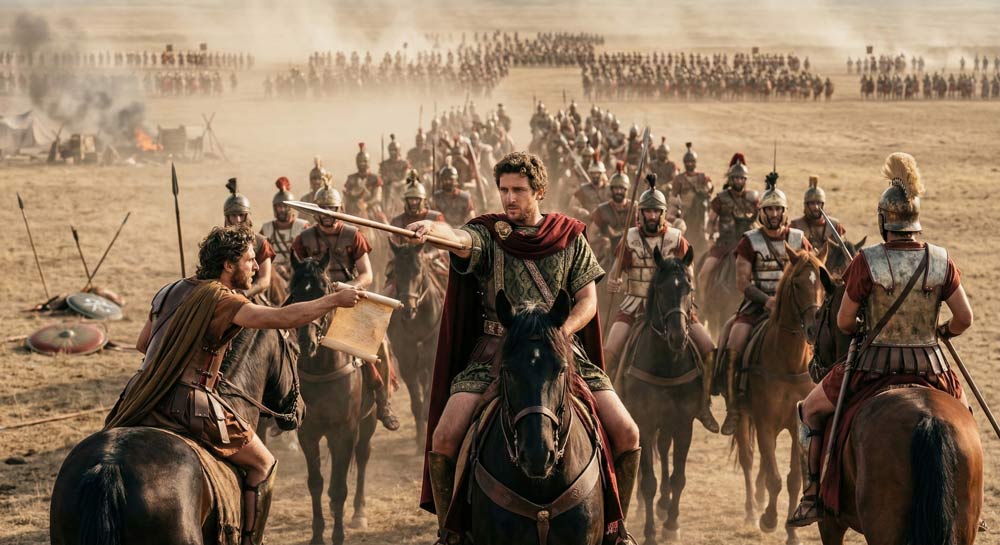
The Persian messenger had barely finished speaking when Alexander turned away. Two hundred thousand Persian soldiers were arrayed across the plain of Gaugamela. His own generals stood in a semi-circle, urging retreat, or at minimum a night attack — anything to reduce the disparity before dawn forced the confrontation.
Alexander listened to none of them. He went to sleep.
Not out of arrogance. Out of calculation. He had spent years designing the decisions he would need at exactly this moment. The oblique advance that would stretch the Persian line. The cavalry wedge that would drive through the gap. The political restraint that had turned conquered provinces into administered territory rather than smoldering ruin.
Gaugamela did not create Alexander the Great. Three decisions made across a decade of campaigns made him. Understanding those decisions is the difference between knowing what happened and understanding why an empire that should have been impossible was built — and lasted.
The World Alexander Inherited — and the Problem He Had to Solve
When Alexander became king of Macedon in 336 BC at twenty years old, the Persian Empire was the largest political entity the world had ever produced. Stretching from the Aegean coast to the Indus River, from Egypt to the steppes of Central Asia, it controlled roughly two million square miles of territory and commanded the loyalty — or at minimum the submission — of fifty distinct nations.
Macedon, by comparison, was a northern Greek kingdom that most of the classical world considered a semi-civilized backwater. Its army was disciplined and innovative — Philip II had spent decades transforming it — but it numbered in the tens of thousands against Persian forces that could field two hundred thousand soldiers for a single engagement.
The conventional wisdom of the ancient world was straightforward: you did not invade Persia. Persia invaded you. The Greek city-states had learned this at Marathon and Thermopylae — where extraordinary discipline and terrain advantages had barely held the Persian advance. A full offensive campaign against the empire was not a military problem. It was a civilizational one.
Alexander solved it with three decisions. Each one contradicted the military logic of his time. Each one, in hindsight, was the only decision that could have worked.
Alexander the Great's Strategic Decision 1: Attack the Strongest Point First
The conventional military wisdom of the ancient world was to probe the enemy’s weaknesses, avoid his strengths, and erode his capacity gradually. Alexander ignored this entirely. His first major engagement on Asian soil — the crossing of the Granicus River in 334 BC — established the pattern that would define every subsequent campaign.
At the Granicus, a Persian cavalry force held the opposite bank of the river in defensive formation. Alexander’s most experienced general, Parmenion, recommended waiting for dawn and a safer crossing point. Alexander crossed immediately, directly into the strongest point of the Persian defensive line.
The logic — if it can be called that — was not recklessness. It was an understanding of psychological momentum. A swift, decisive victory against a defended position communicated something to every subsequent enemy: Alexander would not be deterred by conventional defensive advantages. He would not look for the easy crossing. He would come directly at you.
This was not a formula for every battle. It was a principle: when the fastest path to decision runs through the strongest resistance, take it. Delay allows the enemy to reinforce their confidence and their numbers. Speed and directness remove both.
At the Granicus, Alexander’s charge across the river broke the Persian defensive line in hours. The psychological effect on every Persian province that received news of it was immediate: the Greek who had crossed into Asia was not cautious. He was the opposite of cautious. And he won.
Alexander the Great's Strategic Decision 2: The Oblique Advance and the Aim at the King
The second decision was tactical at its core but strategic in its implications. It answered the fundamental problem of fighting a numerically superior force on open ground: how do you create a decisive advantage against an army that can simply extend its line past yours on both flanks?
Alexander’s answer was the oblique advance — a lateral movement of the entire Macedonian army at an angle across the Persian front, designed to stretch the Persian line as they moved to compensate. As the Persian line elongated to keep pace, it thinned. Gaps formed. And when a gap opened large enough, Alexander drove his Companion cavalry through it — not to attack the Persian line generally, but to reach Darius personally.
This tactic was first deployed at Issus in 333 BC, where Alexander met Darius for the first time in direct engagement. The oblique advance created the gap. The cavalry wedge drove through it. Darius, watching Alexander’s cavalry close on his position, fled — and with him went the command coherence of the Persian army.
The pattern repeated at Gaugamela two years later, on flat ground Darius had specifically prepared to neutralize it. The terrain advantage Darius had engineered — level ground for his scythed chariots — became irrelevant once the oblique advance began. The chariots needed a stable line to charge into. They got a moving one.
What made this decision strategic rather than merely tactical was its psychological component. Every Persian commander who faced Alexander after Issus knew the oblique advance was coming. They prepared for it. They prepared level ground, extended lines, reinforced centers. None of it was sufficient, because the oblique advance was not a trick that could be countered with positioning. It was a mechanism that required the Persian army to stretch itself until it broke.
Alexander the Great's Strategic Decision 3: Conquer Without Destroying
The third decision was the one most contrary to historical precedent — and the one with the longest lasting effects. Alexander did not conquer Persia. He acquired it.
After Issus, his cavalry captured Darius’s camp — including Darius’s mother, wife, and daughters. The conventional response, established by centuries of ancient warfare, would have been to hold them as hostages or sell them into slavery. Alexander treated them as royalty. He reportedly bowed to Darius’s mother, who mistook his companion Hephaestion for Alexander due to his bearing. When corrected, Alexander said: “He too is Alexander.”
Whether that exchange happened exactly as recorded is debated. What is not debated: Alexander consistently treated Persian nobility as potential administrators rather than conquered enemies. He retained Persian governors in many provinces. He adopted elements of Persian court dress and ceremony — a decision that infuriated his Macedonian officers but signaled to Persian subjects that the transition of power did not require the destruction of Persian identity.
This was not altruism. It was the most efficient possible approach to governing a two-million-square-mile empire with an army that numbered in the tens of thousands. You cannot garrison Persia with Macedonian soldiers. You can administer it through Persian administrators who have a reason to cooperate with the new ruler rather than subvert him.
The empire Alexander built lasted, in various forms, for centuries after his death — not because his Macedonian successors were wise administrators, but because the administrative structures and the principle of integration he had established gave conquered peoples a stable framework to operate within.
Gaugamela: Where All Three Decisions Converged
The battle of Gaugamela on October 1, 331 BC, was the moment all three decisions executed simultaneously — under the most extreme pressure Alexander had ever faced.
The oblique advance worked precisely as designed. The Persian line stretched to compensate, the center thinned, and the gap opened on schedule. The cavalry wedge drove through it, aimed at Darius, and the Persian command structure broke when the king fled.
But the decision that defined the battle was not the tactical one. At the critical moment, with Parmenion’s left flank breaking and Persian cavalry attacking his camp, Alexander received a message: retreat, reinforce the left, defend the baggage. Every conventional instinct supported it.
He charged forward instead. He drove his cavalry deeper into the gap, directly at Darius. The bet was that breaking the Persian command structure would resolve both crises simultaneously — that a fleeing king would take the coherence of the Persian attack with him.
He was right. Darius fled. The camp attackers, receiving word that their king had abandoned the field, lost their momentum. Parmenion’s left stabilized without Alexander’s intervention. The three decisions — attack directly, aim at the king, move forward not backward — resolved themselves in a single afternoon.
The Consequences: How an Empire Fell in an Afternoon
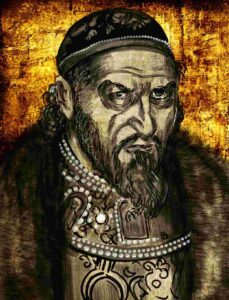
Within three months of Gaugamela, Alexander had entered Babylon, Susa, and Persepolis — the three capital cities of the Persian Empire. Darius, fleeing eastward, was murdered by his own satrap Bessus before Alexander could capture him. The Achaemenid dynasty that Cyrus the Great had established in 550 BC ended not with a final stand but with an assassination by a subordinate who thought he could negotiate with the conqueror.
The Persian soldiers who had fought at Gaugamela were, for the most part, absorbed into Alexander’s army or returned to their provinces. There was no systematic retribution. In Persepolis, Alexander did burn the palace — a calculated gesture of vengeance for the Persian burning of Athens in 480 BC — but the city itself was preserved and administered. The third decision held even at the moment of maximum symbolic opportunity.
The Long Shadow: What Alexander's Decisions Changed Permanently
The Hellenistic period that followed Alexander’s death in 323 BC — the era of the Diadochi, his competing successors — would have been impossible without the administrative framework the third decision created. The successors fought over the pieces of an empire that functioned because Alexander had chosen to administer rather than annihilate.
The oblique advance became a standard of military study. Philip II had invented a version of it; Alexander perfected it into a battle-deciding instrument that was studied, copied, and adapted by commanders across the ancient world and beyond. Julius Caesar’s tactical writings show awareness of Macedonian precedent. Frederick the Great’s oblique order in the 18th century drew on the same principle.
The psychological dimension of the first decision — attacking the strongest point to project invincibility — is less quantifiable but arguably more significant. Alexander was never defeated in pitched battle across thirteen years of continuous campaign. Some of that record is attributable to tactical and logistical excellence. Some of it is attributable to the reputation that the Granicus crossing built, and that every subsequent engagement reinforced. Fear, weaponized deliberately, is a force multiplier that doesn’t appear in modern military balance sheets but that ancient commanders understood intimately.
What Three Decisions Can Actually Tell Us
History is not a collection of lessons to be applied. It is a record of human decisions made under pressure, with incomplete information, against resistant opposition. Alexander is not a template for modern leadership any more than Gaugamela is a template for modern warfare.
But the three decisions are worth sitting with, not as instructions but as examples of a particular kind of strategic clarity: the ability to hold to a principle — attack directly, aim at the command structure, integrate rather than destroy — while the immediate situation argues against it. The Parmenion problem, the temptation to retreat and stabilize, recurs in every domain of human endeavor that involves sustained effort against resistant opposition.
The question Alexander’s record raises is not ‘how do I do what he did?’ It is: what decisions, made consistently over years under pressure, compound into an outcome that looks from the outside like invincibility?
The plain of Gaugamela still exists. The decisions were made there. The reasoning behind them is available to anyone willing to look.
If this is the kind of history you’ve been looking for — History Republic exists for exactly this. Serious historical storytelling, built on accuracy and depth, supported by readers who believe it matters. If that’s you, membership details are below. More is coming.
Frequently Asked Questions
What were Alexander the Great's most important strategic decisions?
The three most consequential strategic decisions were: attacking at the point of maximum resistance rather than seeking safer approaches (established at the Granicus); the oblique advance combined with a cavalry wedge aimed at the enemy commander rather than the enemy line (perfected at Gaugamela); and the integration of conquered peoples into his administrative structure rather than subjugating them (applied consistently from Issus onward).
How did Alexander the Great win the Battle of Gaugamela against such overwhelming numbers?
Alexander won Gaugamela through the oblique advance — a lateral movement of his entire army that forced the Persian line to stretch and thin until a gap opened in the center. He then drove his Companion cavalry through that gap directly at Darius. When Darius fled, Persian command coherence collapsed and the battle ended. The numerical disparity — approximately 200,000 Persian soldiers versus 47,000 Macedonians — was neutralized by a tactical mechanism that made numbers irrelevant once the command structure broke.
Why did Alexander the Great treat conquered peoples differently from other ancient conquerors?
Alexander’s integration policy was primarily strategic rather than altruistic. Governing a two-million-square-mile empire with a Macedonian army numbering in the tens of thousands required functional administrative cooperation from the populations of conquered territories. By retaining Persian administrators, adopting elements of Persian court culture, and treating Persian nobility as potential subordinates rather than enemies, Alexander created a framework through which conquest could become governance. The alternative — systematic subjugation — would have required a garrison presence Macedon could not provide.
Was Alexander the Great ever defeated in battle?
Alexander was never defeated in a pitched battle across thirteen years of continuous campaign. He suffered setbacks — the siege of Gaza was costly, his campaign in India faced significant resistance, and his generals lost engagements in his absence — but every major engagement he commanded personally was won. Historians note that ancient sources are not neutral accounts, and some battles may be better described as costly wins than clean victories. However, the undefeated record in pitched battle is not seriously disputed.
What happened to Darius III after the Battle of Gaugamela?
Darius III fled east after Gaugamela, attempting to regroup and raise a new army in the eastern provinces of the empire. He never succeeded. In 330 BC, as Alexander pursued him, Darius was assassinated by Bessus — the satrap of Bactria — who hoped to negotiate with Alexander using Darius as a bargaining chip or, failing that, eliminate a rival claimant to Persian authority. Alexander gave Darius a royal burial. Bessus was subsequently captured, tried, and executed for the murder of his king.
How did Alexander the Great's military tactics influence later commanders?
The oblique advance that Alexander perfected at Gaugamela was studied and adapted by commanders across the ancient world and into the early modern period. Julius Caesar’s tactical writings show awareness of Macedonian precedent. Frederick the Great’s oblique order — the defining tactical innovation of 18th century Prussian warfare — draws on the same fundamental principle: use lateral movement to create a local superiority at the decisive point rather than engaging the enemy line uniformly. The principle that the decisive blow should fall on the command structure rather than the general line is visible in military doctrine through the present day.