Heroes
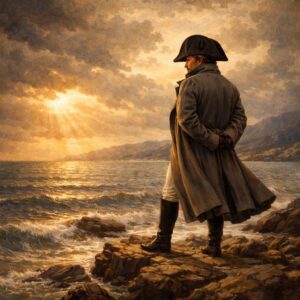
Napoleon’s Hundred Days: What His Return from Exile Reveals About Power and Delusion
He didn’t return despite being exiled — he returned because a man who had remade Europe couldn’t locate himself without an empire to run.“
He didn’t return despite being exiled — he returned because a man who had remade Europe couldn’t locate himself without an empire to run.“
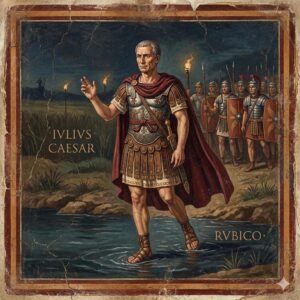
Julius Caesar crossed the Rubicon in 49 BC knowing it would start a civil war. This is what he knew, what he risked, and why he did it anyway.
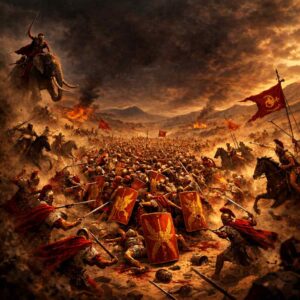
Hannibal’s victory at Cannae remains the definitive military blueprint for the “double envelopment,” proving that a numerically inferior force can achieve total annihilation through tactical brilliance.
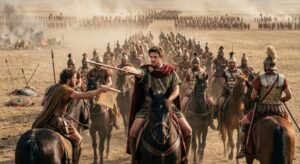
Discover how Alexander the Great built an impossible empire by rejecting conventional wisdom in favor of three high-stakes strategic decisions.
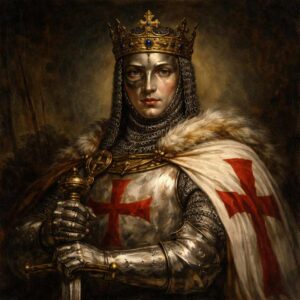
A teenage king marked by leprosy, Baldwin IV held Jerusalem’s fragile Crusader realm together through grit, political nerve, and the stunning victory at Montgisard—buying precious time against Saladin before succession chaos pulled the kingdom toward collapse.
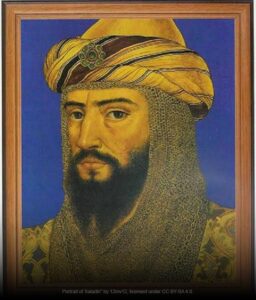
Saladin reclaimed Jerusalem with steel in his hand and restraint in his rule, forging a legacy that reshaped the Crusades and redefined medieval leadership.
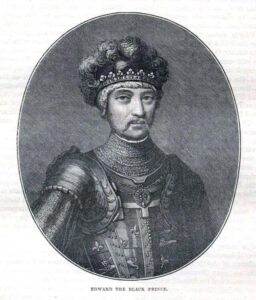
Edward The Black Prince held a line at sixteen, captured a king at twenty-six, lived by his motto of “I serve” and gave it all for his country of England.
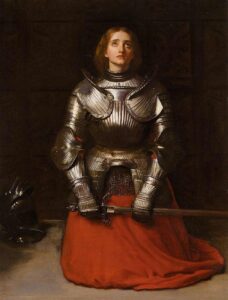
Joan of Arc, a teenage girl who within months would alter the trajectory of the Hundred Years’ War, lift a besieged city, and escort an exiled prince to his coronation.

Robert the Bruce rose from a noble background tangled in shifting loyalties to become Scotland’s unifying monarch in the early 14th century.
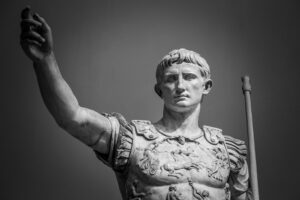
Julius Caesar used bold military conquests and sharp political acumen to accumulate unrivaled power—only to meet a tragic end on the Ides of March, forever altering Rome’s course from republic to empire.