Turning Points
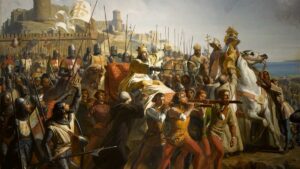
Battle of Montgisard: How Baldwin IV Beat Saladin in 1177
In November 1177, Saladin marched out of Egypt with a large army aimed at the crusader Kingdom of Jerusalem. Standing in his way was a
In November 1177, Saladin marched out of Egypt with a large army aimed at the crusader Kingdom of Jerusalem. Standing in his way was a
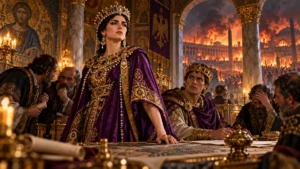
The ships were ready. Constantinople was burning, the mob had a new emperor, and the men around Justinian were weighing whether to run. Then Empress
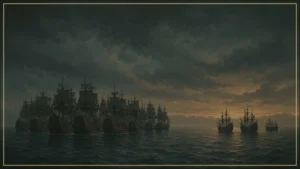
Weather finished damaged ships—but the Armada of 1588 had already failed. A fragile Parma rendezvous, English gunnery, and logistics decided the campaign.
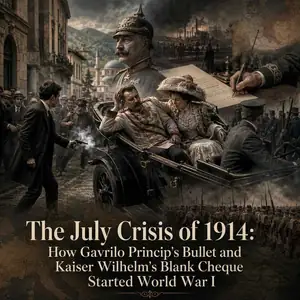
The archduke’s driver took a wrong turn straight into Gavrilo Princip’s path, and the shots that followed — amplified by Kaiser Wilhelm’s unconditional “blank cheque” to Austria-Hungary — triggered the July Crisis that ignited World War I.
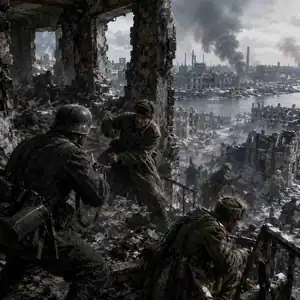
Stalingrad’s six months of urban combat didn’t just kill hundreds of thousands — it broke the myth of German invincibility and rewrote the logic of modern war.
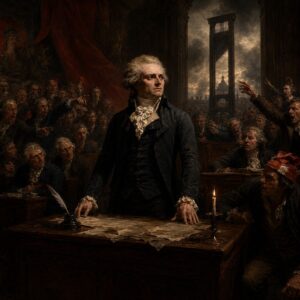
Robespierre built the Reign of Terror to protect the French Revolution — then it destroyed him. Inside the logic of revolutionary self-destruction.
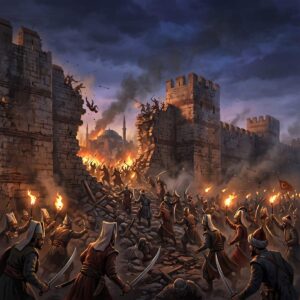
For a millennium, the city was considered impregnable. But on May 29, 1453, a 21-year-old sultan with revolutionary artillery shattered its legendary walls. In a single night, Mehmed II didn’t just conquer a city—he ended a 1,000-year empire and reshaped the course of history forever.
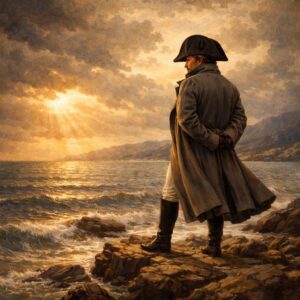
He didn’t return despite being exiled — he returned because a man who had remade Europe couldn’t locate himself without an empire to run.“
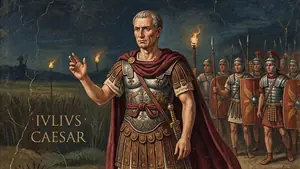
Julius Caesar crossed the Rubicon in 49 BC knowing it would start a civil war. This is what he knew, what he risked, and why he did it anyway.
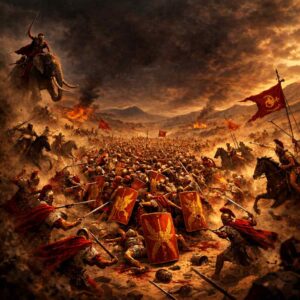
Hannibal’s victory at Cannae remains the definitive military blueprint for the “double envelopment,” proving that a numerically inferior force can achieve total annihilation through tactical brilliance.