Travel Through Time

Slide through time, pick a corner of the map, and step into the story that happened there.

3000 BC to Today

Where it happened

  1. Romulus: The Founder of Rome, c. 753 BC, Palatine Hill, Rome, Italy
  2. Cyrus The Great, c. 550 BC, Pasargadae, Iran
  3. Battle of Salamis: Xerxes and How Arrogance Ends Empires, 480 BC, Strait of Salamis, Greece
  4. Leonidas of Sparta, 480 BC, Thermopylae, Greece
  5. Alexander the Great: Did He Believe He Was a God?, 336 BC, Aigai (Vergina), Greece
  6. Alexander the Great: The 3 Strategic Decisions That Built an Empire, 334 BC, Granicus River, Turkey
  7. Ptolemy I Soter: The General Who Became Pharaoh, 305 BC, Alexandria, Egypt
  8. Hannibal: Why the Victor of Cannae Never Took Rome, 218 BC, Crossing of the Alps (France/Italy)
  9. The Battle of Cannae: Why Rome’s Greatest Defeat Is Still Studied Today, 216 BC, Cannae, Italy
  10. Spartacus: The Gladiator Who Defied an Empire, 73 BC, Capua, Italy
  11. Cleopatra: The Last Queen of Egypt, 51 BC, Alexandria, Egypt
  12. The Rubicon: What Caesar Knew, What He Risked, and Why He Did It Anyway, 49 BC, Rubicon River, Italy
  13. Julius Caesar: Why the Senate Killed the Dictator for Life, 44 BC, Theatre of Pompey, Rome, Italy
  14. Saint Valentine, c. AD 269, Via Flaminia, Rome, Italy
  15. Zenobia of Palmyra, AD 270, Palmyra, Syria
  16. Saint Patrick: Shepherd, Saint, and Symbol of a Nation, c. AD 432, Saul, County Down, Northern Ireland
  17. Attila The Hun, AD 451, Catalaunian Plains, France
  18. The Fall of Rome: Why There Was No Single Moment — And Why That Makes It More Terrifying, AD 476, Ravenna, Italy
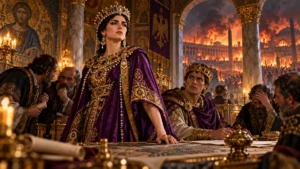
  19. Empress Theodora: The Woman Who Saved Justinian’s Throne, AD 532, Constantinople (Istanbul), Turkey
  20. Khalid ibn al-Walid: The General Who Never Lost a Battle, AD 636, Yarmouk River, Jordan/Syria
  21. Charlemagne: Why a Pope Crowned the Frankish King Emperor, AD 800, Old St Peter's, Rome, Italy
  22. Olga of Kyiv, AD 945, Kyiv, Ukraine
  23. Otto The Great, AD 955, Lechfeld, near Augsburg, Germany
  24. William The Conqueror, 1066, Battle, East Sussex, England
  25. El Cid of Spain, 1094, Valencia, Spain
  26. Afonso I of Portugal, 1139, Coimbra, Portugal
  27. Battle of Montgisard: How Baldwin IV Beat Saladin in 1177, 1177, Montgisard, near Ramla
  28. Baldwin IV of Jerusalem: The Leper King, 1177, Montgisard, near Ramla, Israel
  29. Saladin: Why the Sultan Took Jerusalem Without a Massacre, 1187, Jerusalem
  30. Frederick Barbarossa: The Red-Bearded Emperor, 1190, Saleph River, near Silifke, Turkey
  31. Richard the Lionheart, 1191, Acre, Israel
  32. Genghis Khan: The Conqueror of Empires, 1206, Onon River, Khentii, Mongolia
  33. Genghis Khan’s Intelligence Empire: The Spy Network That Conquered Half the World, 1219, Otrar, Kazakhstan
  34. Robert the Bruce, 1314, Bannockburn, Scotland
  35. Edward The Black Prince, 1356, Poitiers, France
  36. Joan of Arc: From Farm Girl to the Siege of Orléans, 1429, Orléans, France
  37. Mehmed The Conqueror, 1451, Edirne, Turkey
  38. The Fall of Constantinople, 1453: How Mehmed II’s Siege Ended a 1,000-Year Empire, 1453, Theodosian Walls, Constantinople (Istanbul)
  39. Vlad the Impaler: The Real Vlad III Dracula Behind the Myth, 1462, Târgoviște, Romania
  40. Ivan the Terrible: The Making of Russia’s First Tsar, 1547, Moscow Kremlin, Russia
  41. Ivan the Terrible and the Politics of Fear, 1565, Aleksandrova Sloboda, Russia
  42. How Oda Nobunaga Used Fear to Unify a Divided Japan, 1571, Mount Hiei, near Kyoto, Japan
  43. Why the Spanish Armada Failed (It Wasn’t Just the Weather), 1588, Off Gravelines, English Channel
  44. Peter the Great’s Brutal Modernization: How Russia Was Dragged Into the 18th Century, 1698, Preobrazhenskoye, Moscow, Russia
  45. Peter the Great, 1703, Saint Petersburg, Russia
  46. Charles XII of Sweden: The King Who Refused to Lose, 1709, Poltava, Ukraine
  47. Peter the Great and Alexei: When Empire Demands the Destruction of Family, 1718, Peter and Paul Fortress, Saint Petersburg
  48. Robespierre and the Reign of Terror: Why Revolutions Devour Their Own Architects, 1793, Paris, France
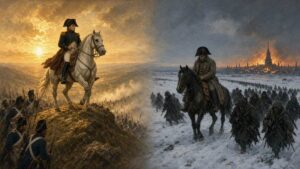
  49. Napoleon’s Overconfidence: Genius or Fatal Flaw?, 1812, Borodino, Russia
  50. Napoleon’s Hundred Days: What His Return from Exile Reveals About Power and Delusion, 1815, Waterloo, Belgium
  51. The July Crisis of 1914: How Gavrilo Princip’s Bullet and Kaiser Wilhelm’s Blank Cheque Started World War I, 1914, Latin Bridge, Sarajevo, Bosnia
  52. Stalingrad: Why Six Months of Urban Combat Changed the Second World War Forever, 1942, Stalingrad (Volgograd), Russia

52 stories

3000 BC to today All regions

Ancient World 18 stories

  1. Bronze statue of the she-wolf nursing the infant twins Romulus and Remus, standing on a stone plinth.

    c. 753 BC Rome, Italy

    Romulus: The Founder of Rome

    Rome's founder, or Rome's founding myth?

  2. Illustration of Cyrus the Great in profile, bearded and wearing a ridged helmet, set over swirling smoke above his name

    c. 550 BC Pasargadae, Iran

    Cyrus The Great

    From modest beginnings to one of the largest empires.
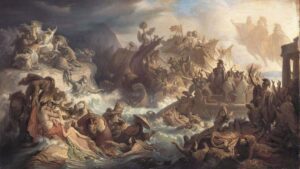
  3. The Battle of Salamis by Wilhelm von Kaulbach, 1868, with Xerxes watching from his throne as the Persian fleet is destroyed

    480 BC Strait of Salamis, Greece

    Battle of Salamis: Xerxes and How Arrogance Ends Empires

  4. Bronze statue of Leonidas of Sparta in a crested helmet, holding a round shield, under a clear blue sky

    480 BC Thermopylae, Greece

    Leonidas of Sparta

    300 Spartans hold the pass.

  5. Mosaic of Alexander the Great in battle armor

    336 BC Aigai (Vergina), Greece

    Alexander the Great: Did He Believe He Was a God?

    King at 20, with an empire from Greece to Persia.
  6. Illustration of Alexander leading cavalry across a plain

    334 BC Granicus River, Turkey

    Alexander the Great: The 3 Strategic Decisions That Built an Empire

    Before Gaugamela, he went to sleep.

  7. Prefer reading on your phone?

    History Republic for iPhone

    Download History Republic on the App Store
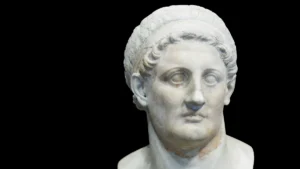
  8. Marble bust of Ptolemy I Soter, the Macedonian general who became pharaoh, wearing a diadem, against a black background

    305 BC Alexandria, Egypt

    Ptolemy I Soter: The General Who Became Pharaoh

    Alexander's general founds a dynasty in Egypt.

  9. Marble bust of Hannibal wearing a decorated helmet

    218 BC Crossing of the Alps (France/Italy)

    Hannibal: Why the Victor of Cannae Never Took Rome

    He led war elephants across the Alps.
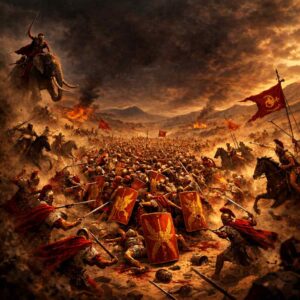
  10. Illustration of the Battle of Cannae with Roman legions encircled

    216 BC Cannae, Italy

    The Battle of Cannae: Why Rome’s Greatest Defeat Is Still Studied Today

    Outnumbered two to one, Hannibal annihilated Rome's army.
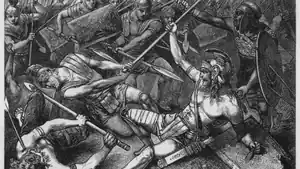
  11. Hermann Vogel’s 1882 engraving of Spartacus falling in his last battle, ringed by Roman legionaries with spears and shields

    73 BC Capua, Italy

    Spartacus: The Gladiator Who Defied an Empire

    He led one of antiquity's most famous slave revolts.
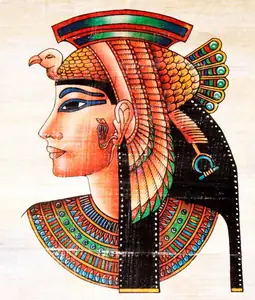
  12. Egyptian-style painting of Cleopatra in profile, wearing a vulture headdress and a broad jewelled collar

    51 BC Alexandria, Egypt

    Cleopatra: The Last Queen of Egypt

    Caesar, Antony, and a fight for Egypt's independence.
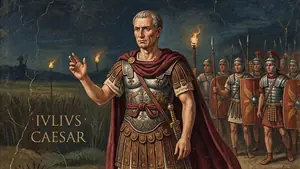
  13. Painted fresco-style illustration of Julius Caesar at night beside the Rubicon, one hand raised, with torch-lit Roman legionaries waiting behind him.

    49 BC Rubicon River, Italy

    The Rubicon: What Caesar Knew, What He Risked, and Why He Did It Anyway

    Crossing this river meant war with Rome.
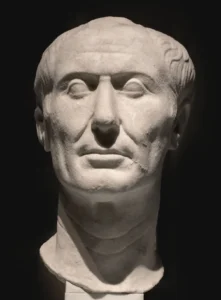
  14. Marble Tusculum portrait bust of Julius Caesar, Museo di Antichità, Turin

    44 BC Rome, Italy

    Julius Caesar: Why the Senate Killed the Dictator for Life

    Unrivaled power, then the Ides of March.

  15. Icon-style painting of Saint Valentine, white-bearded with a halo and red robe, holding a scroll against a gold background

    c. AD 269 Rome, Italy

    Saint Valentine

    The secret marriage rites behind February 14.

  16. Carved stone funerary bust of a veiled woman with an ornate headband beside an inscription, in the style of ancient Palmyra

    AD 270 Palmyra, Syria

    Zenobia of Palmyra

    A desert queen who defied the legions of Rome.

  17. White stone statue of Saint Patrick in a bishop's mitre, holding a crozier and raising a small cross against a blue sky

    c. AD 432 County Down, Northern Ireland

    Saint Patrick: Shepherd, Saint, and Symbol of a Nation

    Kidnapped young, he returned to the land that held him.
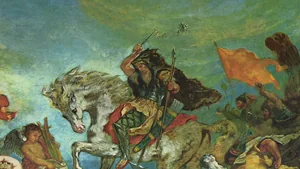
  18. Detail of Delacroix’s painting of Attila the Hun on a rearing pale horse, arm raised, riding over fallen figures

    AD 451 Catalaunian Plains, France

    Attila The Hun

    The “Scourge of God” who terrified an empire.
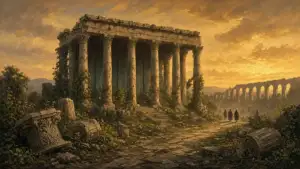
  19. Overgrown ruins of a Roman temple portico at dusk, with a broken aqueduct on the horizon and three cloaked travellers walking away down a cracked Roman road.

    AD 476 Ravenna, Italy

    The Fall of Rome: Why There Was No Single Moment — And Why That Makes It More Terrifying

    Rome didn't fall in a day. It unraveled.
Medieval World 21 stories

  1. Empress Theodora in purple imperial robes standing at Justinian’s council table as Constantinople burns beyond the palace arches

    AD 532 Constantinople (Istanbul), Turkey

    Empress Theodora: The Woman Who Saved Justinian’s Throne

    Constantinople burned. She refused to run.
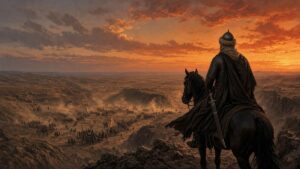
  2. Khalid ibn al-Walid, seen from behind on horseback, overlooking a 7th-century battlefield in the Levant at dusk

    AD 636 Yarmouk River, Jordan/Syria

    Khalid ibn al-Walid: The General Who Never Lost a Battle

    At Yarmouk, he retreated to win.

  3. Drawing of Charlemagne wearing a jeweled crown and cloak

    AD 800 Rome, Italy

    Charlemagne: Why a Pope Crowned the Frankish King Emperor

    The “Father of Europe,” made emperor in 800.
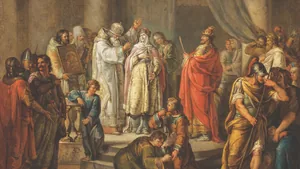
  4. Akimov’s 1792 painting of Olga of Kyiv’s baptism: a bearded patriarch blesses her as a crowned ruler in a red cloak looks on

    AD 945 Kyiv, Ukraine

    Olga of Kyiv

    She steered the Rus from trade route toward statehood.

  5. Medieval manuscript drawing of Otto I enthroned with crown and sceptre, flanked by courtiers and armed men

    AD 955 near Augsburg, Germany

    Otto The Great

    He united the German duchies and reached into Italy.
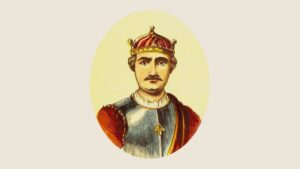
  6. Hand-coloured oval portrait of William the Conqueror wearing a jewelled crown and armour.

    1066 East Sussex, England

    William The Conqueror

    Hastings, 1066, and a new Anglo-Norman order.
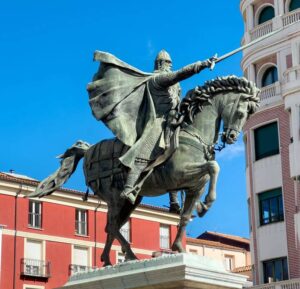
  7. Bronze equestrian statue of El Cid raising a sword (Burgos)

    1094 Valencia, Spain

    El Cid of Spain

    From exiled captain to lord of Valencia.
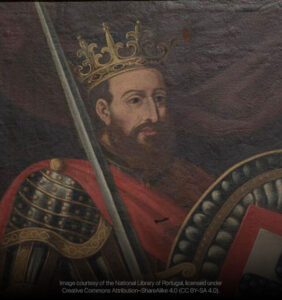
  8. Painted portrait of Afonso I of Portugal crowned, holding a sword

    1139 Coimbra, Portugal

    Afonso I of Portugal

    He turned a frontier county into a kingdom.
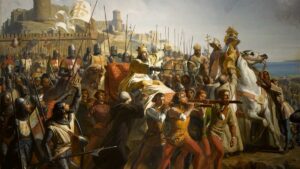
  9. Charles-Philippe Larivière’s 19th-century oil painting of the Battle of Montgisard: the young King Baldwin IV, crowned and robed in gold, rides in a red-draped litter carried by his men and points toward the fight, while a bishop on a rearing white horse lifts a golden reliquary beside armored crusader knights with tall spears, a white banner with gold crosses and a hilltop castle behind them.

    1177 Montgisard, near Ramla

    Battle of Montgisard: How Baldwin IV Beat Saladin in 1177

    A 16-year-old king with leprosy and a few hundred knights routed Saladin's invasion.
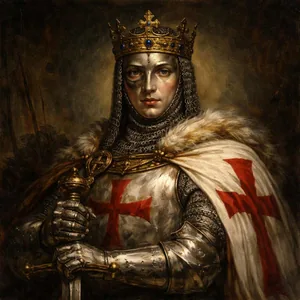
  10. Illustration of Baldwin IV in crown and Crusader surcoat with red cross

    1177 near Ramla, Israel

    Baldwin IV of Jerusalem: The Leper King

    A teenage king with leprosy holds off Saladin.
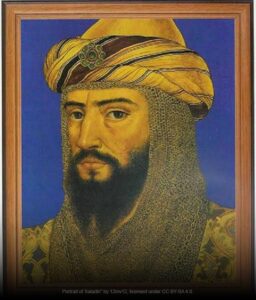
  11. Portrait of Saladin in a yellow turban

    1187 Jerusalem

    Saladin: Why the Sultan Took Jerusalem Without a Massacre

    He took back Jerusalem with steel and restraint.
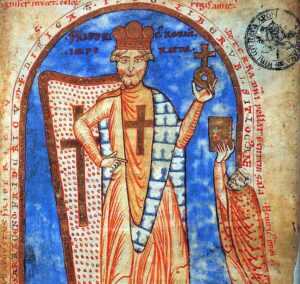
  12. Medieval manuscript illustration of Frederick Barbarossa as a crusader with cross and orb

    1190 near Silifke, Turkey

    Frederick Barbarossa: The Red-Bearded Emperor

    One fatal river crossing ended his crusade.
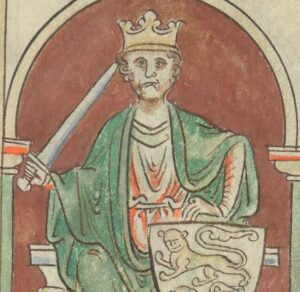
  13. Medieval manuscript illustration of Richard I enthroned with sword

    1191 Acre, Israel

    Richard the Lionheart

    Acre, Arsuf, Jaffa, then a ransom for his freedom.
  14. Sepia ink portrait of Genghis Khan with a stern expression, wearing a fur-trimmed cap and armour.

    1206 Khentii, Mongolia

    Genghis Khan: The Conqueror of Empires

    Born Temujin on the steppe, he built a vast empire.
  15. Genghis Khan with scouts, maps and messengers

    1219 Otrar, Kazakhstan

    Genghis Khan’s Intelligence Empire: The Spy Network That Conquered Half the World

    The spies arrived six months before the army.

  16. Stone statue of Robert the Bruce, crowned and bearded, in chain mail with both hands resting on his sword

    1314 Bannockburn, Scotland

    Robert the Bruce

    He steered Scotland to a lasting independence.
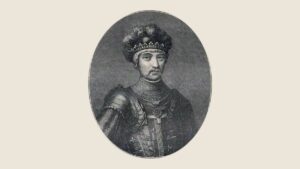
  17. Engraved oval portrait of Edward the Black Prince wearing a crown and chain-mail armour.

    1356 Poitiers, France

    Edward The Black Prince

    A line held at 16. A king captured at 26.
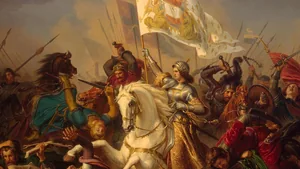
  18. Hermann Stilke’s 1843 painting of Joan of Arc in silver armour on a white horse, holding her white banner high in battle

    1429 Orléans, France

    Joan of Arc: From Farm Girl to the Siege of Orléans

    A year after minding sheep, she rode into Orléans.
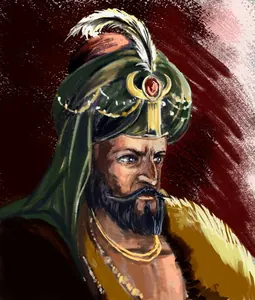
  19. Painted portrait of Mehmed the Conqueror in a green turban with a white plume and jewelled crest, wearing a fur-trimmed robe

    1451 Edirne, Turkey

    Mehmed The Conqueror

    An ancient city falls; an old empire is reshaped.
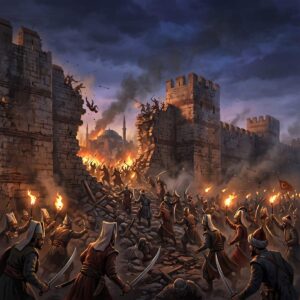
  20. Ottoman soldiers storming the burning walls of Constantinople at night

    1453 Theodosian Walls, Constantinople (Istanbul)

    The Fall of Constantinople, 1453: How Mehmed II’s Siege Ended a 1,000-Year Empire

    A 21-year-old sultan breaks the legendary walls.
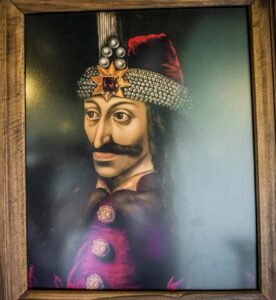
  21. Portrait of Vlad III the Impaler in a jewelled cap

    1462 Târgoviște, Romania

    Vlad the Impaler: The Real Vlad III Dracula Behind the Myth

    The real prince behind the legend of Dracula.
Early Modern 9 stories

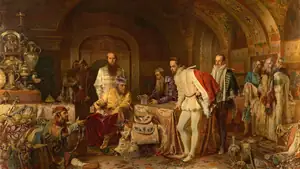
  1. Litovchenko’s 1875 painting of Ivan the Terrible in gold robes, showing his treasures to the English envoy Jerome Horsey

    1547 Moscow Kremlin, Russia

    Ivan the Terrible: The Making of Russia’s First Tsar

    From traumatized orphan to the most feared tsar.
  2. An empty carved throne in a candlelit Kremlin chamber, an iron-tipped staff leaning against it and a black fur cloak on the floor, with snow-covered onion domes visible through the window.

    1565 Aleksandrova Sloboda, Russia

    Ivan the Terrible and the Politics of Fear

    He abandoned Moscow, then waited.

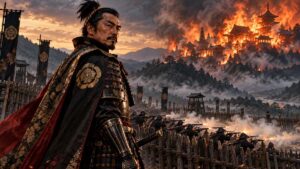
  3. Samurai silhouette with an Oda crest banner watching Mount Hiei burn as arquebusiers fire from behind a palisade under a red sun.

    1571 near Kyoto, Japan

    How Oda Nobunaga Used Fear to Unify a Divided Japan

    He set the monasteries of Mount Hiei on fire.
  4. Spanish Armada fleet on a dark stormy sea

    1588 Off Gravelines, English Channel

    Why the Spanish Armada Failed (It Wasn’t Just the Weather)

    The plan had failed before the storms hit.
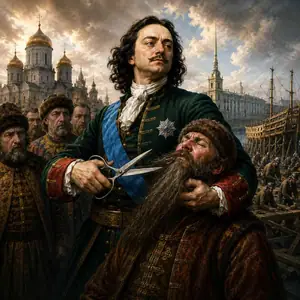
  5. Peter the Great cutting a boyar’s beard with scissors

    1698 Moscow, Russia

    Peter the Great’s Brutal Modernization: How Russia Was Dragged Into the 18th Century

    The tsar cut off the boyars' beards himself.
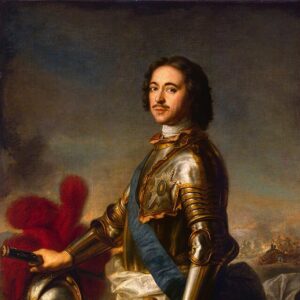
  6. Portrait of Peter the Great in armour with a blue sash

    1703 Saint Petersburg, Russia

    Peter the Great

    He carved a capital out of swamps.

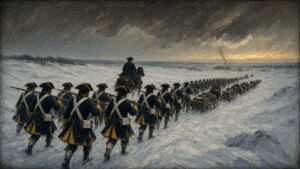
  7. Swedish Carolean infantry in dark blue coats with yellow facings, white cross-belts and black tricorn hats march away through deep snow during Charles XII’s winter campaign of 1708–1709, muskets on their shoulders, while a mounted officer seen only from behind leads the column past baggage sleds under a stormy dusk sky.

    1709 Poltava, Ukraine

    Charles XII of Sweden: The King Who Refused to Lose

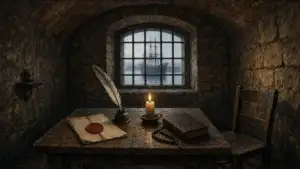
  8. A candlelit stone cell in the Peter and Paul Fortress, where a sealed decree and quill lie beside a prayer book and prayer beads, and an empty chair is pushed back from the table. Through the barred window, a sailing warship waits on the misty Neva.

    1718 Peter and Paul Fortress, Saint Petersburg

    Peter the Great and Alexei: When Empire Demands the Destruction of Family

    The tsar had his own son tried for treason.
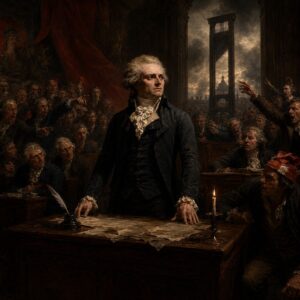
  9. Robespierre at a desk before the Convention with a guillotine behind

    1793 Paris, France

    Robespierre and the Reign of Terror: Why Revolutions Devour Their Own Architects

    He built the Terror. Then it destroyed him.
Modern World 4 stories

  1. Napoleon on horseback at sunrise over Austerlitz on one side and leading a frozen retreat from burning Moscow on the other

    1812 Borodino, Russia

    Napoleon’s Overconfidence: Genius or Fatal Flaw?

    Same man, same methods: Austerlitz, then Russia.
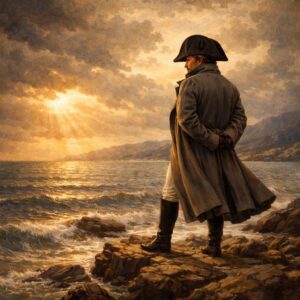
  2. Napoleon standing on a rocky shore at sunset looking at the sea

    1815 Waterloo, Belgium

    Napoleon’s Hundred Days: What His Return from Exile Reveals About Power and Delusion

    One thousand soldiers. No artillery. He came back.
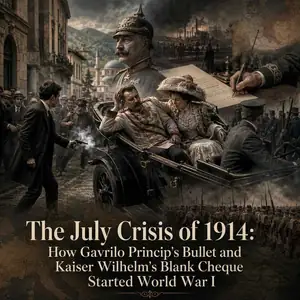
  3. Illustration of the Sarajevo assassination with Kaiser Wilhelm and title text

    1914 Sarajevo, Bosnia

    The July Crisis of 1914: How Gavrilo Princip’s Bullet and Kaiser Wilhelm’s Blank Cheque Started World War I

    One wrong turn, straight into Princip's path.
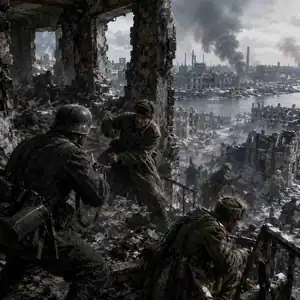
  4. Soldiers fighting in Stalingrad’s ruined buildings

    1942 Stalingrad (Volgograd), Russia

    Stalingrad: Why Six Months of Urban Combat Changed the Second World War Forever

    Every building was a separate war.

Carry all of history in your pocket

Every story on this map, plus new ones as they publish, in the History Republic app for iPhone.

Download History Republic on the App Store

Prefer to help directly? Support History Republic