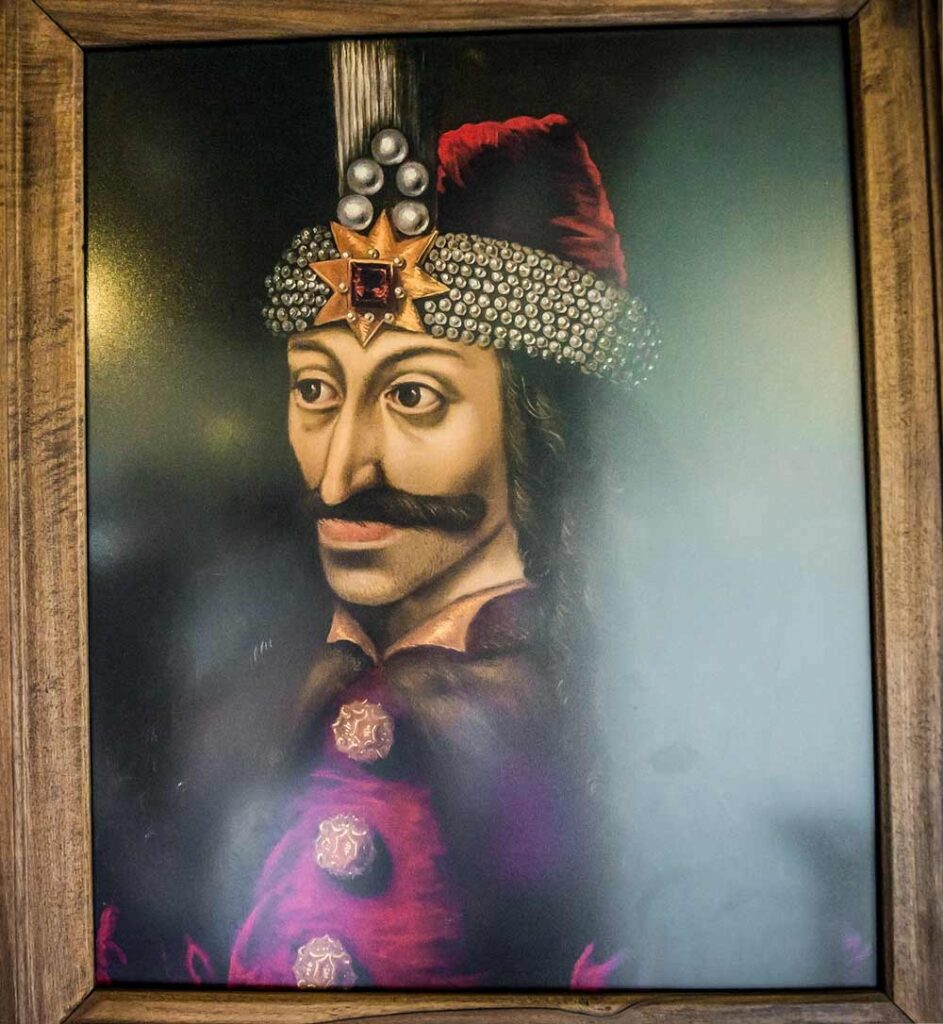
Before he was a monster of midnight tales, Vlad III was a prince born on a knife-edge—his country, Wallachia, wedged between the ambitions of Hungary and the rising Ottoman Empire, his childhood split between loyalty to his father and captivity in a foreign court.
To later generations he would become “Țepeș,” the Impaler, and to modern pop culture he would lend a name—Dracula—that swallows the man in shadow.
But the real Vlad lived in daylight: a ruler who took his first lessons in power as a hostage, returned to a fractured homeland, and tried to weld order from fear on a frontier where treaties bent with the wind.
This is the story of the world that made him, the brothers and sultan who shaped him, the brutal campaigns that defined him, and the long echo of his death—an echo that still beats in our literature, our legends, and our appetite for the dark.
Vlad the Impaler at a glance
- Also known as: Vlad III, Vlad Dracula (Romanian Drăculea, “son of Dracul”), Vlad Țepeș
- Born: 1431, Sighișoara, Transylvania
- Father: Vlad II Dracul, a member of the Order of the Dragon
- Ruled Wallachia: three times, in 1448, 1456–1462 and 1476
- Best known for: mass impalements, and the Night Attack on Mehmed II’s camp near Târgoviște on the night of 16–17 June 1462
- Died: fighting Basarab Laiotă and his Ottoman allies in late 1476 or early January 1477, near Snagov, north of present-day Bucharest
- Buried: no one knows where
A borderland between empires
In the fifteenth century, Wallachia lay where the Carpathians slid down into the Danube plain—a gate between Central Europe and the Black Sea. The land was wealthy in wheat and cattle, but it lived in a narrow corridor of danger.
To the north and west loomed Hungary; to the south, the Ottoman Empire, whose crescent advanced steadily up the Balkans during the 1300s.
By the time Vlad was born (1431), Wallachia had already learned to survive by compromise: its princes paid tribute southward and angled for favor northward. Under Mircea the Old (r. 1386–1418), Wallachia first agreed to pay tribute; by 1417, it had acknowledged Ottoman suzerainty—retaining local autonomy, but as a client on the empire’s edge.
That arrangement—half-independent, half-dependent—wasn’t a neat treaty so much as a tense practice. A Wallachian voivode might seek Hungarian help one year and Ottoman protection the next, depending on who threatened his throne.
Out of this balancing act came Vlad’s father, Vlad II Dracul, a politically agile prince inducted into the Order of the Dragon (draco)—a crusading fraternity whose emblem later gave the family its famous sobriquet: Drăculea, “son of the Dragon.”
Hostages at the heart of the Ottoman court
In 1442, the seesaw lurched. Vlad II was summoned to the Ottoman court and compelled to guarantee his loyalty in the hardest currency medieval princes knew: his children.
His son Vlad (about eleven) and younger son Radu were sent to Sultan Murad II as “collateral”—royal hostages who would live under Ottoman eyes to ensure their father paid tribute and held to his promises.
For the boys, the new world was Edirne (Adrianople), then capital of the Ottoman state: domes, courtyards, and the strict rhythm of court life. A hostage in that era wasn’t chained in a dungeon; he was kept comfortably but closely, a valuable pledge who might be trained in languages, statecraft, and war. Sources agree on the broad strokes—Vlad and Radu grew up in the Ottoman sphere—and diverge over details.
What matters is what the arrangement was forged. Vlad learned the empire’s strength from the inside and developed a bitter, wary knowledge of its habits. Radu took to the court more easily, and in time would become an ally—and instrument—of the Ottomans.
When news reached the court in 1447 that the elder Vlad Dracul and Vlad’s older brother Mircea had been killed amid Wallachian factional violence, the hostage bargain no longer made sense. The Ottomans briefly backed Vlad as their candidate for the throne.
He returned to Wallachia for a short, faltering first reign in 1448 before being pushed out by rivals and forced into years of exile and maneuver.
Brothers at the crossroads: Vlad and Radu
If fate made them rivals, the Ottoman experience sharpened the wedge between the brothers. Vlad came away with a hard mistrust of the sultans and of those Wallachian boyars who wavered in their loyalties. Radu—called “the Handsome”—remained in Ottoman favor.
As Mehmed II (Murad’s brilliant son) ascended the throne and took Constantinople in 1453, Radu became a useful friend at his court. In Wallachia, elites took note: there were two Drăculești princes now, one austere and unpredictable in Transylvanian exile, the other urbane and favored by the greatest power in the region.
When the final showdown arrived, Wallachian nobles would have to choose.
The road back to the throne
Vlad returned for good in 1456, at a moment when the Danube frontier trembled. John Hunyadi’s Christian armies had just checked the Ottomans at Belgrade; power in the region was fluid. Vlad seized his chance.
He fought his Wallachian rival Vladislav II—by many accounts killing him in single combat—and took the throne for his longest rule (1456–1462). He came back determined to break the cycle that had killed his father: weak central power, boyar conspiracies, and double-dealing on tribute.
The medicine he chose was terror—and efficiency. He reorganized taxation and tightened control over trade and coinage. He punished theft and corruption brutally, and when boyars plotted, he answered with mass executions.
These were not random spasms, as his admirers later argued; they were policy. Vlad believed fear would stabilize the realm, eliminate conspirators, and prove to neighbors that Wallachia would not be a puppet. The same logic would shape his response to the Ottoman Empire.
Why he rebelled
For decades, Wallachian peace had been bought with annual tribute to the sultan. Vlad refused to keep paying. His letters from 1461–62 cast the decision in crusading terms—defense of Christendom—but there was cold politics behind it too: tribute meant humiliation and dependence, boyars resented it, and Hungary offered moments of support.
In early 1462 he wrote triumphantly to King Matthias Corvinus about his raids across the Danube and the capture and destruction of the Ottoman fortress at Giurgiu—a boast that reveals both his audacity and his preference for surprise, infiltration, and shock.
In retaliation, Mehmed II assembled a massive punitive expedition. This was no border raid but an imperial campaign, led by the conqueror of Constantinople himself—a theater of power meant to strip Vlad of legitimacy and install the compliant Radu in his place.
The summer of 1462: a war of fear
Vlad knew he could not win pitched battles against the sultan’s weight of men and guns. So he fought like a frontier wolf—disappearing by day, striking by night, and leaving behind horrors that bled into rumor.
He emptied villages and scorched the land to deny forage, ambushed columns in forests and defiles, and used handgunners and fast cavalry to rip at Ottoman supply lines. The campaign’s defining moment came on the night of 16–17 June 1462, outside Târgoviște: the famous Night Attack.
Under the cover of darkness and chaos, Wallachian riders in small detachments blazed into the sleeping Ottoman camp, killing thousands and slashing toward the sultan’s tent in a calculated attempt to assassinate Mehmed himself.
The plan failed by a hair, but its psychological effect was electric. Contemporary accounts give different numbers for losses—none particularly reliable—but agree on the shock.
When Mehmed advanced toward Wallachia’s capital, he encountered what later writers would call a “forest of the impaled”: thousands of Ottoman prisoners and suspected collaborators spiked on high stakes along the approach.
The figure of twenty thousand is almost certainly exaggerated. The most careful modern count puts the victims there at about 1,600 to 1,700, still a horror meant to be seen. One Greek chronicler reports the sultan staring in horrified amazement; the message was unmistakable—Wallachia would be ruled by Vlad, or it would be a graveyard.
“Biological warfare” and the line between tactic and tale
Modern retellings sometimes credit Vlad with hurling plague corpses or sending the visibly ill into Ottoman lines to seed disease—a grisly form of biological warfare. It’s important to mark the line between colorful story and evidence.
We know medieval besiegers in other contexts sometimes used corpses as crude weapons (the 1346 siege of Caffa is the usual example), but historians continue to debate both the frequency and the effectiveness of such acts. For Vlad’s 1462 campaign specifically, robust primary evidence is thin: you will find the claim in popular histories and magazines, but not all scholars accept it at face value.
What deserves emphasis is clear regardless: Vlad used terror as strategy—night assaults, scorched earth, impalement displays, and ruses—to magnify a small state’s power against an empire.
For a parallel case of deliberate public cruelty, see how Oda Nobunaga used fear to unify Japan.
How Many People Did Vlad the Impaler Really Kill?
The numbers attached to Vlad have always been huge. He has been accused of killing anywhere from 40,000 to 100,000 people, and the story goes that 20,000 of them were impaled outside his capital, Târgoviște. Vlad helped build that reputation himself. In a letter to the king of Hungary dated 11 February 1462, he counted 23,889 people killed in his winter attack on Ottoman lands.
In 2025 the historian Dénes Harai set out to test those numbers one story at a time. He gathered every surviving mention of Vlad’s impalements in Byzantine and Ottoman chronicles, papal and Venetian reports, Transylvanian documents and Vlad’s own letters, then checked each against the firmest evidence available. The pattern held:
- The Saxon merchants, 1459: a letter written at the time counts 41 people impaled. A German pamphlet published a few years later says 600.
- The Easter banquet, 1459: the same pamphlet says 500 boyars were impaled. Historians who have studied the site think 40 to 50 is closer.
- The “forest of the impaled” at Târgoviște, 1462: about 1,600 to 1,700 people, not 20,000.
Add the other documented incidents and Harai’s total comes to just over 2,000 impalements. That’s still thousands of people dead in one of the cruelest ways imaginable. Harai is clear that the new count doesn’t soften Vlad’s rule. But it changes the picture. Vlad didn’t invent the stake: both the Hungarian kings and the Ottoman sultans already used it. What set him apart was how often he staged collective impalements, not how many victims each one claimed.
Why did the numbers grow so large? Vlad’s enemies in Transylvania and at the Ottoman court wanted a monster, and his Hungarian allies found a terrifying anti-Ottoman champion useful. Inflated numbers suited everyone.
Vlad The Impaler’s Collapse and captivity
Strategy could delay, not deny, Ottoman power. After the Night Attack, Mehmed withdrew with losses, but left Radu, handsome and agreeable, to gather Wallachia’s elites beneath the empire’s shadow. Many boyars, weary of Vlad’s punishments and wary of Ottoman wrath, shifted their allegiance.
Vlad’s political oxygen thinned. Seeking aid, he crossed into Transylvania to see King Matthias Corvinus of Hungary—only to be arrested. For years he remained a prisoner (or high-status detainee) in Hungarian custody, a living bargaining chip in regional games.
While Vlad languished, Radu reigned in Wallachia as an Ottoman client. The frontier calmed into the uneasy status quo Vlad had tried to break.
His imprisonment lasted through much of the 1460s and into the mid-1470s—time enough for Saxon presses to flood German lands with lurid woodcuts of the “blood-drinker of Wallachia,” and for Slavic storytellers to render him, paradoxically, as a stern defender of order.
One last throw of the dice
In 1475, circumstances turned again. With Ottoman campaigns shifting focus and Hungarian politics in flux, Vlad secured release and a final chance at power. He re-entered Wallachia in 1476 and briefly reclaimed the throne—the culmination of two decades of struggle.
The triumph didn’t last. Within months, amid renewed fighting and local treachery, Vlad was killed north of today’s Bucharest. Later reports claim his head was cut off and sent to Mehmed II in Constantinople as proof; even in death, the message theater persisted.
Where Is Vlad the Impaler Buried?
No one knows. A popular tradition, first written down in the late 19th century, places his grave in the monastery at Snagov. When Dinu V. Rosetti excavated there in 1933, he found no tomb under the stone said to be Vlad’s, only bones and horses’ jaws. The historian Constantin Rezachevici argued that Vlad was more likely buried at Comana Monastery, which Vlad had founded near the battlefield where he died. Even that is a best guess.
What remained after the man
Vlad’s immediate legacy was a divided memory. In Romanian lands, particularly in Wallachia and later in nationalist retellings, he became a symbol of harsh justice and sovereign will—a ruler who crushed boyar conspiracies, defended the border, and punished thieves so severely that, legend had it, a golden cup could sit unguarded at a public fountain.
In the German-speaking towns of Transylvania—Wallachia’s prickly commercial partners—he became the antihero of early mass media, a monster in cheap pamphlets whose woodcuts show him calmly dining amid forests of stakes. Both images carry truth; both also carry agenda.
As for historical judgment, modern scholarship tends to file the most extravagant numbers and stories under “propaganda” while conceding Vlad’s cruelty was real and systematic.
Summarizing his rule, emphasizes both the undeniable horrors (impalement as policy) and the political logic that drove them, noting how he “inflicted this type of torture on foreign and domestic enemies alike… leaving a field filled with thousands of impaled victims as a deterrent to pursuing Ottoman forces.”
Archaeology and military history now and then toss new sparks into the old fire. In 2019, for example, a trove of early cannonballs found in Bulgaria was linked to Vlad’s Danube operations of 1461–62, suggestive of the small but evolving artillery game on the frontier. Each find adds texture to the picture of a resourceful, ruthless commander playing for survival.
Hero or Monster? How Romania Remembers Vlad
Outside Romania, Vlad is mostly a horror story. Inside Romania, he’s remembered very differently. Britannica notes that he became a folk hero in the region for standing up to the Ottomans. National Geographic calls him “something of a national hero” there, remembered for defending his people from foreign invaders. Most Romanian artists have portrayed him as a harsh but just ruler who punished criminals and disloyal boyars to strengthen the state. Ion Budai-Deleanu’s epic Țiganiada made him a hero.
Both pictures come from the same man. Which one you see depends on who was writing, and why, and that’s what makes Vlad worth exploring.
From Voivode to vampire: why Vlad became “Dracula”
So how did a fifteenth-century Danubian prince become the patron saint of modern vampires? The bridge is less direct than popular culture suggests.
Bram Stoker, an Irish theater manager with a flair for the atmospheric, spent the early 1890s compiling notes for a Gothic novel. He read travelogues and histories about Transylvania and the Balkans and—crucially—browsed a book by the British diplomat William Wilkinson, whose 1820 Account of the Principalities of Wallachia and Moldavia included a footnote explaining that “Dracula” in Wallachian usage meant “devil,” a nickname for fierce or cunning men. Stoker, who had been calling his villain “Count Wampyr,” copied the note and changed the name. The deed, in literary terms, was done.
What Stoker didn’t do was retell Vlad’s life. He never visited Romania and, aside from sprinkling a few vaguely historical references into the Count’s monologues, left the voivode’s biography on the shelf. The vampire’s powers come mainly from a stew of European folklore and nineteenth-century anxieties—immigration, sexuality, contagion—rather than from specific events on the Danube.
But the name stuck, and with it the shadow. That shadow is why tourists today stand beneath the battlements of “Dracula’s Castle,” and why each new Vlad documentary balances between sober history and Gothic theatrics.
Where Is Dracula's Castle? Bran, Poenari and Târgoviște
Search for “Dracula’s castle” and you’ll land on Bran Castle, about 25 km southwest of Brașov. The Saxons of Brașov built it in stone after King Louis I of Hungary granted them the right in 1377. It’s marketed abroad as Dracula’s Castle. Yet there’s no evidence Bram Stoker knew anything about it, and most historians agree Vlad never lived there. Today it’s a museum, showing art and furniture collected by Queen Marie of Romania.
For a fortress with a real claim to Vlad, explore Poenari, a ruin on a steep crag above the Argeș gorge. The tower there is older than Vlad, probably built by the first Basarab princes of Wallachia. The Argeș County Museum, which runs the site, attributes a later expansion to Vlad’s time: a curtain wall nearly 60 meters long, with three semicircular towers. Later Wallachian chronicles tell how he got it built. To punish the townspeople of Târgoviște, he had them seized on Easter Day and marched to Poenari, where they worked until the clothes fell off their backs.
Vlad’s true seat of power was Târgoviște, the Wallachian capital. His family moved there in 1436, when his father took the throne, and in 1462 it was the city Mehmed II’s army marched on.
The human story inside the legend
Step back from the slogans—impaler, tyrant, hero, Dracula—and a more human arc appears. Vlad grew up a political hostage in an empire that dwarfed his homeland. He returned to a principality where his father and brother had been murdered by elites he could not trust. He tried to build a state strong enough to keep those elites in line and hold the frontier—without the numbers, money, or neighbors to make that task easy.
His choices were ruthless, often atrocious. Yet they were not random. He used fear deliberately: at home to shatter conspiracies; on campaign to make a small army look larger; in diplomacy to force stronger enemies to think twice.
The ethical verdict on such a ruler is not difficult. The historical verdict is more subtle. Vlad’s strategy bought time—for him, for Wallachia, and for a frontier that might have vanished more quickly without a hard-edged prince to hold it.
It also cost dearly in blood and in the moral imagination of Europe, where his pamphlet-perfect image helped fix the very word “Dracula” as a byword for predation.
Conclusion: the man, the border, the myth
Vlad III of Wallachia lived and died on a fault line—between Ottoman and European power, between noble privilege and princely authority, between memory and myth.
His story begins in the compromises of a client principality and the cold language of hostage diplomacy; it swells into a dark epic of night raids and stake-forests; it dwindles into a lonely death and a severed head.
Then, improbably, it lifts again in fiction, as the name “Dracula” slips from a frontier chronicle into a Gothic legend, and from legend into our modern imagination.
To understand him is not to excuse him. It is to see how a prince with few cards played them with ferocity; how fear can be a weapon that wins skirmishes and loses souls; how a name taken from a medieval order of the Dragon can pass through a nineteenth-century novelist’s pen and come to mean something entirely different.
Vlad’s world is gone, but the questions he raises—about power, terror, and the stories we tell about both—remain.
Watch on YouTube
Prefer to watch? Explore it in under a minute.
“Vlad the Impaler the Myth of Dracula” on YouTube (opens in a new tab)
Vlad the Impaler: Frequently Asked Questions
Was Vlad the Impaler the real Dracula?
Only by name. Vlad III’s family name came from his father, Vlad II Dracul, a member of the Order of the Dragon; Drăculea means “son of the Dragon.” Bram Stoker borrowed the name for his villain after reading a note that “Dracula” meant “devil” in Wallachian usage, but he did not retell Vlad’s life.
Why was Vlad III called the Impaler?
Because of his use of impalement as terror. When Sultan Mehmed II advanced on Wallachia’s capital in 1462, he found what later writers called a “forest of the impaled”: thousands of prisoners and suspected collaborators on stakes. In Romanian the nickname is Țepeș.
What was the Night Attack?
On the night of 16–17 June 1462, outside Târgoviște, Vlad’s riders raided the sleeping Ottoman camp in small detachments, killing thousands and driving toward the sultan’s tent in an attempt to kill Mehmed himself.
How did Vlad the Impaler die?
He retook the Wallachian throne in 1476, and within months, amid renewed fighting and local treachery, he was killed north of today’s Bucharest.
How many people did Vlad the Impaler kill?
He has been accused of killing 40,000 to 100,000 people. A 2025 study by the historian Dénes Harai puts his impalements at just over 2,000, including about 1,600 to 1,700 in the famous “forest of the impaled” outside Târgoviște in 1462.
Is Bran Castle really Dracula's castle?
Not really. The Saxons of Brașov built Bran after a royal grant in 1377. There’s no evidence Bram Stoker knew of it, and most historians agree Vlad never lived there. Poenari, a fortress expanded in Vlad’s time, has a far stronger claim.
What does "Dracula" mean?
It means “son of Dracul.” Vlad’s father, Vlad II, was known as Dracul, from the Latin draco (“dragon”), after he joined the Order of the Dragon, which Emperor Sigismund founded to fight the Ottomans.
Where is Vlad the Impaler buried?
No one knows. Tradition points to Snagov Monastery, but a 1933 excavation found no tomb under the stone attributed to him. The historian Constantin Rezachevici thought Comana Monastery more likely.
Related on History Republic
- Constantinople 1453: How Mehmed II’s Siege Ended a 1,000-Year Empire in a Single Night
- Ivan the Terrible and the Politics of Fear
- Mehmed The Conqueror
Keep exploring in the History Republic app.
An interactive map of where history happened, short biographies of history’s heroes, and quizzes. Free to download.

Sources & further reading
As an Amazon Associate I earn from qualifying purchases.