On January 24, AD 41, the emperor of Rome walked out of a theater on the Palatine Hill and into a narrow passage under the palace. A tribune of his own guard, Cassius Chaerea, was waiting. Within minutes the 28-year-old ruler of the known world lay dead, stabbed again and again by the men sworn to protect him. Was Caligula insane, as the stories insist, or did the people who killed him, and the people who wrote about him, need him to be?
Caligula has become shorthand for madness on a throne. He supposedly wanted to make his horse a consul, ordered soldiers to collect seashells as war trophies, and claimed to be a god. Some of that happened. Some of it probably didn’t. And almost all of it reaches us through writers who hated him.
So here is the case, piece by piece: the young emperor Rome adored, the illness that supposedly changed him, the famous stories, and the murder. Along the way we’ll flag where the ancient writers stop being trustworthy, and why the “mad emperor” may be one of history’s most successful smear campaigns, or one of its most deserved reputations.
Who Was Caligula?
He was born Gaius Julius Caesar, named, like many men of his family, after Julius Caesar. Romans mostly called him Gaius. Britannica notes that he was born on August 31, AD 12, at Antium, south of Rome, the son of Germanicus, the most popular general of his generation.
“Caligula” was a nickname. It means “Little Boot,” after the miniature army boots, or caligae, he wore as a small boy in his father’s camps on the Rhine. Suetonius says the soldiers gave it to him as a joke because he was raised among them in a common soldier’s outfit. Seneca, who lived through the reign, says that by the time Gaius was emperor he treated the name as “a reproach and a dishonour.”
His childhood was a slow-motion catastrophe. His father died in Syria in AD 19, and many Romans blamed the emperor Tiberius. His mother, Agrippina, and his two older brothers fell foul of Tiberius and died in prison or exile. By the early 30s, Gaius was the last male survivor of his immediate family, living on the island of Capri under the eye of the man many believed had destroyed it.
He survived by saying nothing. Suetonius writes that people at Capri tried every trick to make him complain, and he never took the bait. He was so obedient to Tiberius that, as the saying went, “no one had ever been a better slave or a worse master.” Suetonius also has Tiberius remark that he was “rearing a viper for the Roman people.”
The Most Popular Man in Rome
When Tiberius died in March AD 37, Gaius was 24, with no time commanding armies and almost no political experience. Rome didn’t care. He was Germanicus’ son, young, and not Tiberius. Suetonius claims that in the first three months of the new reign, more than 160,000 animals were sacrificed in thanksgiving.
Philo of Alexandria, a Jewish scholar who later met Caligula in person, describes those first seven months as something like the golden age of Saturn from the poets, a time of feasts, games and “universal prosperity and happiness.” Caligula paid out generous bonuses, staged lavish games and made a show of burning Tiberius’ hated treason files. For a while, he looked like the answer to Rome’s prayers.
The Sources Behind the "Mad Emperor"
Before we get to the horse and the seashells, it helps to know who’s telling the story, because that changes everything.
- Suetonius wrote his Lives of the Caesars roughly 80 years after Caligula died. He loved gossip and often repeats rumors with an “it is said.”
- Cassius Dio, a Greek-speaking senator, wrote his Roman History more than 180 years later. He gives a looser timeline and leans heavily on the senate’s point of view.
- Seneca the Younger lived through the reign and nearly died under it. His writings about Caligula date from the reign of Claudius, the next emperor, who had every reason to make his predecessor look terrible.
- Philo actually stood in front of Caligula as part of a Jewish embassy from Alexandria around AD 40, and he wrote as a man whose people had been threatened by the emperor.
- Tacitus, the most careful Roman historian, did cover these years, but the books of his Annals that dealt with Caligula are lost.
In other words, every surviving account comes from a hostile witness. Britannica puts it bluntly: accounts of Caligula’s reign by ancient historians “are so biased against him that the truth is almost impossible to disentangle.”
You can even see Suetonius changing gears on the page. After describing Caligula’s public works and generosity, he writes: “So much for Caligula as emperor; we must now tell of his career as a monster.” The rest of the biography is a catalogue of horrors.
The Illness of AD 37: Turning Point or Convenient Story?
The traditional story of Caligula has a clean shape. He started well, fell seriously ill, and came back a different man.
Philo is the main source for this. He writes that in the eighth month of the reign, in the autumn of AD 37, “a severe disease attacked” the emperor. Philo blames his new lifestyle: strong wine, rich food, hot baths and excess after years of a simple life under Tiberius. The whole empire prayed for him. Suetonius says crowds kept vigil outside the palace all night, and some people even offered their own lives if the gods would spare him.
He recovered. Then the killing started. Within months, Caligula’s young cousin and adopted son Tiberius Gemellus was forced to die. So was his former father-in-law, Marcus Silanus. In early AD 38 he turned on Macro, the Praetorian prefect who had helped put him on the throne. Britannica notes that after the illness he restored treason trials and “showed great cruelty.”
What Was Wrong With Him?
Nobody knows what the illness was, and 2,000 years later nobody can. Suetonius says that as a boy Caligula suffered from “the falling sickness,” the ancient name for epilepsy, and that as a young man he had fainting fits. He also says the emperor slept no more than three hours a night, was haunted by nightmares, and once dreamed that the spirit of the Ocean spoke to him. Suetonius even passes along a rumor that his wife, Caesonia, gave him a love potion that drove him mad.
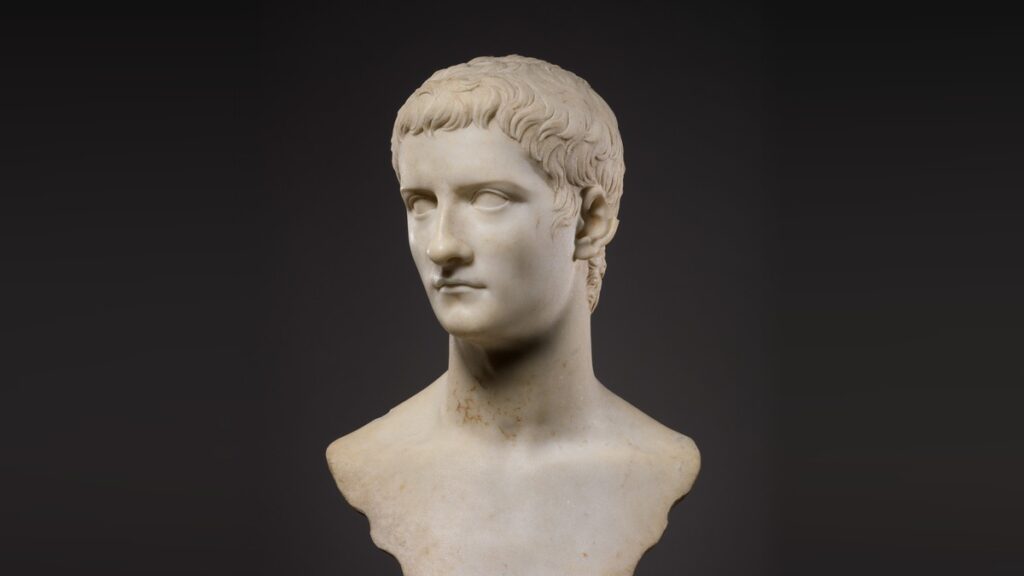
Modern writers have proposed everything from epilepsy to encephalitis to bipolar disorder. Britannica allows that he “may have suffered from epilepsy.” But a diagnosis built on Suetonius is shaky ground. He also claims Caligula was hideous and goat-like, at a time when Romans believed a person’s looks revealed their character. That description was meant to tell readers what kind of man he was, not what he looked like.
There’s another problem with the neat “illness changed him” story. The purges began so soon after his recovery that some historians doubt there was ever a real switch from good to bad. A young ruler who had watched Tiberius destroy his family might simply have absorbed the lesson: strike first.
Caligula's Horse: Did He Really Make Incitatus a Consul?
This is the story everyone knows, and it’s the one most worth checking.
The horse was real. His name was Incitatus, roughly “Swift,” and he was a racehorse. Caligula was a passionate fan of the Greens, one of the chariot-racing factions. Suetonius says soldiers were sent out the day before races to keep the neighborhood quiet so the horse could rest. Incitatus had a marble stall, an ivory manger, purple blankets and a jeweled collar, plus a house and slaves to entertain guests invited in his name.
Then comes the line that made history: “it is also said that he planned to make him consul.” Note the wording. Suetonius doesn’t say it happened. He says people said Caligula planned it. Cassius Dio, writing a century later, goes a step further. He says Caligula invited the horse to dinner, fed him golden barley, and promised to make him consul, “a promise that he would certainly have carried out if he had lived longer.”
So did it happen? No. Britannica states flatly that the claim he made his horse consul is untrue. At most, Caligula talked about it.
The more interesting question is why he talked about it. Historian Aloys Winterling, in Caligula: A Biography, argues that jokes like this were aimed squarely at the senate. The consulship was the highest honor a Roman aristocrat could dream of. Suggesting a racehorse could do the job was a way of telling senators exactly what he thought of them. Suetonius, who either didn’t get the joke or didn’t want to, presented it as proof of madness.
Seashells, Bridges and Gods: The Other Famous Stories
The horse isn’t the only story that looks different up close.
The Seashells on the Ocean Shore
In AD 40, Caligula marched an army to the northern coast of Gaul, apparently to invade Britain. According to Suetonius, he drew up his troops on the shore with artillery ready, then ordered them to gather seashells and fill their helmets, calling them “spoils from the Ocean.” Dio tells the same story and adds that Caligula carried the shells back to Rome to show off.
It sounds unhinged. But modern historians have offered other readings. Some scholars have suggested the story grew out of a misunderstanding of the Latin word musculi, which can mean both shellfish and a kind of shed used in siege work. Others think the invasion was called off for practical reasons, such as a mutiny or a British surrender, and the “shell” episode was a mocking way to describe a campaign that never launched. Britain was eventually invaded under his successor, Claudius, in AD 43.
The Bridge at Baiae
Caligula once had a temporary bridge built across the bay between Baiae and Puteoli, near modern Naples. Suetonius says it ran about 3,600 Roman paces and was made of merchant ships anchored in a double line and paved over with earth like the Appian Way. Caligula rode across it on horseback one day and in a chariot the next.
Suetonius offers three explanations. Some people thought Caligula wanted to rival Xerxes, the Persian king who bridged the Hellespont, a story told in our post on Xerxes and the Battle of Salamis. Others thought it was meant to frighten Germany and Britain. But Suetonius says his own grandfather heard from palace insiders that an astrologer had once told Tiberius that Gaius had no more chance of becoming emperor than of riding a horse across the Bay of Baiae. If that’s true, the bridge wasn’t madness. It was the world’s most expensive “told you so.”
A Living God?
Caligula did push his claims to divinity further than any emperor before him. Britannica notes that in AD 40 he ordered a statue of himself set up in the Temple in Jerusalem, and only backed down after the Jewish king Herod Agrippa talked him out of it.
Philo’s eyewitness account of his embassy is the closest we get to seeing Caligula in action, and it’s strange in a way that feels real. The emperor greeted the Jewish envoys by calling them “haters of God” for refusing to worship him. Then, instead of hearing their case, he wandered through the buildings of the imperial gardens, inspecting rooms and ordering renovations while the ambassadors chased after him. At one point he stopped to ask, “Why is it that you abstain from eating pig’s flesh?” Finally he dismissed them, saying they seemed “not to be wicked so much as unfortunate and foolish” for not believing he was a god.
That’s arrogant, cruel and bizarre. It’s also the behavior of a man who knows exactly how much power he has and enjoys watching others squirm.
Was Caligula Insane, or Cruel and Untouchable?
Strip away the rumors, and a lot of cruelty is left. Seneca, who knew the court firsthand, writes that Caligula had senators and knights flogged and tortured in a single day “merely to amuse himself,” and once had people beheaded by lamplight while walking in his mother’s gardens. Suetonius says the emperor liked to quote a line from an old tragedy: “Let them hate me, so they but fear me.” Angry at a crowd for cheering the wrong team, he supposedly said, “I wish the Roman people had but a single neck.”
But cruelty isn’t the same as insanity. Winterling makes a sharp point here: under Roman law, a person who was truly insane wasn’t held responsible for their actions. If Caligula’s contemporaries had believed he was genuinely mad, his behavior would have been treated as an illness, not a crime. The writers who called him a madman also blamed him for everything he did.
Anthony A. Barrett, in Caligula: The Abuse of Power, paints a different picture: a young man obsessed with his own survival, handed unlimited power with almost no experience, and gifted with a cruel sense of humor. Read that way, many of the “mad” stories make more sense as deliberate humiliations of the Roman elite. Suetonius’ senators forced to run for miles beside the emperor’s chariot and the horse-for-consul joke share the same target.
So, was Caligula insane? Probably not in the way the legend means. The more likely answer is less comforting: he was a young autocrat with no limits, no restraint and a taste for degrading the people who resented him. Those people survived him, and they wrote the history.
Murder on the Palatine and Why the Myth Stuck
By January AD 41, the list of people who wanted Caligula dead was long. Cassius Chaerea had personal reasons. Suetonius and Dio both say the emperor mocked him as soft and effeminate, giving him watchwords like “Priapus” or “Venus” when it was his turn to command the guard. Dio adds that Caligula had been warned by an oracle to beware of “Cassius,” and assumed it meant a provincial governor descended from one of Julius Caesar’s assassins.
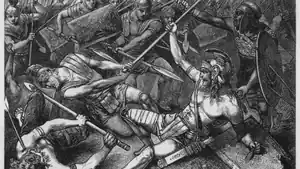
During the Palatine Games, Chaerea and another tribune, Cornelius Sabinus, caught the emperor in a narrow passage. Suetonius says Chaerea struck first, and the others finished him with thirty wounds. His German bodyguards arrived too late. They killed some of the assassins, along with senators who had nothing to do with the plot. Caligula’s wife, Caesonia, was killed, and so was their baby daughter.
The ancient writers can’t even agree on how long he ruled. Suetonius says three years, ten months and eight days. Dio says three years, nine months and twenty-eight days. Dio closes the reign with one cold line: Gaius found out “by actual experience that he was not a god.”
In the chaos, some senators talked about restoring the Republic, the old system Julius Caesar had broken when he crossed the Rubicon. The Praetorian Guard had other ideas. In the traditional story, a soldier found Caligula’s uncle Claudius hiding behind a curtain in the palace and carried him off to be proclaimed emperor.
That succession is a big reason the “mad Caligula” story stuck. Claudius couldn’t approve of murdering an emperor, but he had no reason to defend Caligula’s memory either. Statues were taken down or recarved. Writers working under Claudius, like Seneca, painted Caligula as a monster. Later historians like Suetonius and Dio inherited that portrait and added to it.
None of this makes Caligula a misunderstood good ruler. The executions were real, and so was the cruelty. But the cartoon of a raving lunatic with a horse in the senate is mostly a myth, built by his enemies and repeated for two thousand years. If you want to see how the same pattern played out with another ruler whose legend outgrew the man, the story of Vlad the Impaler is a good next stop. And if you’re curious how Rome’s long run of bad emperors fits the bigger picture, our look at the fall of Rome explains why no single ruler brought it down.
Support History Republic
Was Caligula Insane? Frequently Asked Questions
Was Caligula actually insane?
There’s no reliable evidence that he was. The stories of his madness come from writers who were hostile to him, most of them writing decades or centuries later. Many modern historians, including Aloys Winterling and Anthony A. Barrett, see him as cruel, arrogant and deliberately insulting to the senate rather than clinically insane. He may have had a serious illness in AD 37, and Suetonius says he suffered from epilepsy as a child, but no one can diagnose him today.
Did Caligula make his horse a consul?
No. Suetonius says it was rumored that he planned to make his racehorse Incitatus a consul, and Cassius Dio says he promised to. It never happened. Many historians read it as a joke aimed at insulting the senators who held that office.
How did Caligula die?
He was assassinated on January 24, AD 41, in a passage beneath the palace on the Palatine Hill during the Palatine Games. The killers were officers of his own Praetorian Guard, led by Cassius Chaerea and Cornelius Sabinus. His wife and young daughter were also killed, and his uncle Claudius became emperor.
Why was he called Caligula?
“Caligula” means “Little Boot.” As a small boy, Gaius traveled with his father’s army on the Rhine dressed in a miniature soldier’s outfit, including little army boots called caligae. The soldiers gave him the nickname, and it stuck, even though he reportedly disliked it.
Related on History Republic
- Julius Caesar: Why the Senate Killed the Dictator for Life
- Vlad the Impaler: The Real Vlad III Dracula Behind the Myth
- The Fall of Rome: Why There Was No Single Moment
- Battle of Salamis: Xerxes and How Arrogance Ends Empires
Keep exploring in the History Republic app.
An interactive map of where history happened, short biographies of history’s heroes, and quizzes. Free to download.

Sources & further reading
As an Amazon Associate I earn from qualifying purchases.
Books
Reference
Primary sources
- Suetonius, Life of Caligula, trans. J. C. Rolfe (LacusCurtius)
- Cassius Dio, Roman History, Book 59, trans. Earnest Cary (LacusCurtius)
- Philo, On the Embassy to Gaius, trans. C. D. Yonge (Wikisource)
- Seneca, Of Anger, Book III, trans. Aubrey Stewart (Wikisource)
- Seneca, On the Firmness of the Wise Man, trans. Aubrey Stewart (Wikisource)